
What a Suicide-Prevention Video Teaches About Culturally Respectful Visual Storytelling
Sensitive topics need more than attention-grabbing creative. They need care, clarity and respect. An example on Hand Drawn Videos website offers a useful reminder that hand drawn videos work best when visual storytelling is built around audience context, plain language and cultural care.
A useful lesson from a public example
Not every communication challenge is really a content challenge. Sometimes the issue is that the format is doing too little work.
That becomes obvious when the topic is sensitive. Suicide prevention, mental health and community wellbeing are not messages you can afford to make vague, cold or generic. If the audience does not feel recognised, if the steps are hard to follow or if the tone feels imported from somewhere else, the communication may miss the people it is supposed to support.
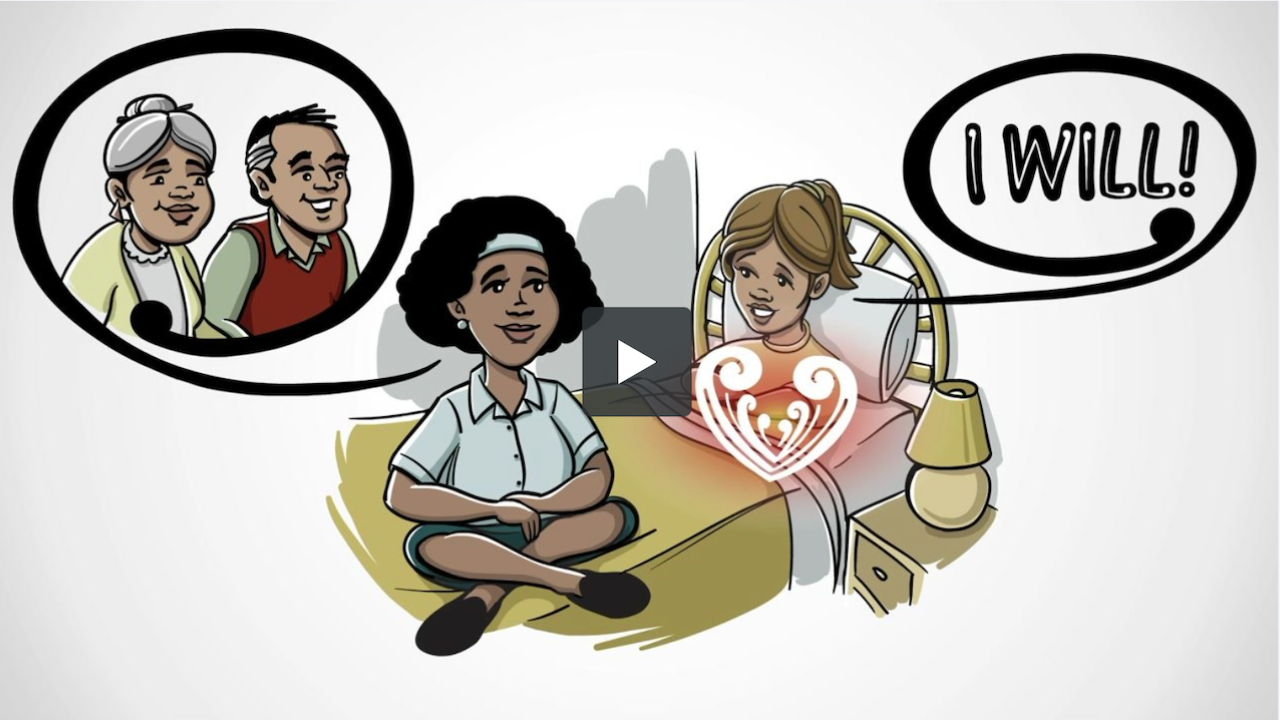
That is why a video example on the Hand Drawn Videos homepage is worth noticing. The site showcases work for Te Rau Ora in New Zealand, describing it as a suicide-prevention series created to raise awareness among Māori youth. The homepage also says the videos were produced in te reo Māori as well as English, and adapted into portrait format for Instagram.
That matters, not because it proves a marketing claim and not because one example can stand in for a full evaluation, but because it shows three sound communication instincts:
1. the audience was specific
2. the language choice was specific
3. the format choice was specific
That is exactly where hand drawn videos can be useful. Good visual storytelling is not just about making information more attractive. It is about making the message feel easier to enter, easier to follow and easier to remember, while still respecting the seriousness of the topic.
Sensitive communication needs more than simplification
The World Health Organization says suicide is a serious public health problem that requires a public health response. Its March 2025 fact sheet notes more than 720,000 people die every year due to suicide and that risk is shaped by social, cultural, biological, psychological and environmental factors. WHO also notes that some groups facing discrimination, including Indigenous peoples, can experience higher risk.
Those points are important for communicators because they push against two bad habits.
The first is overselling. A single campaign asset should never be framed as if it can solve a complex health issue on its own.
The second is flattening. If risk is shaped by culture, community, stress, identity, environment and access to support then communication cannot assume that one generic message will land equally well everywhere.
That is where hand drawn videos can help, if they are used properly. They can slow a message down into a sequence. They can show a pathway rather than dropping a pile of facts on the viewer. They can combine voice, illustration and pacing to explain what a concern looks like, what support exists and what the next step might be. For sensitive subjects, that kind of structure matters.
Why the format can help people understand
The Centers for Disease Control and Prevention says visuals can make complex information easier to comprehend and can reinforce written or spoken health messages. It also gives an important warning; visuals do not speak for themselves, they need clear headings, labels and captions that support the main message.
That is a strong fit for hand drawn videos. A well-made hand drawn video can:
- reveal a process step by step
- connect concepts that are often discussed separately
- give the audience one clear path through the message
- reduce reliance on dense policy or clinical language
This matters in organisations as much as in public health. Leaders are often trying to explain support pathways, warning signs, respectful language, reporting options or where someone can turn for help. A written policy may still be necessary but many people will understand the message faster when it is shown as a visual sequence rather than a wall of text.
Plain-language guidance supports that approach. Digital.gov's current plain-language guide says content that is clear and easy to understand is critical if people are going to make sense of their obligations and benefits. In other words, clarity is not a soft extra. It is part of whether communication is usable.
Cultural respect is part of the design, not the decoration
This is the lesson organisations most often underestimate.
The Australian Government says improving the health of Aboriginal and Torres Strait Islander people is a national priority and that it works in partnership with Aboriginal and Torres Strait Islander people to develop and implement strategies, programs and initiatives. The same page points readers to the National Aboriginal and Torres Strait Islander Health Plan 2021-2031 and to resources translated into Indigenous languages.
That is not just policy language. It is practical guidance for communication work.
If respectful communication matters, then the process matters:
- who helps shape the brief
- who reviews the script
- whether the language sounds local and recognisable
- whether the imagery avoids stereotypes or deficit framing
- whether the support pathways shown are actually relevant to the intended audience
The AIATSIS Code of Ethics for Aboriginal and Torres Strait Islander Research reinforces the same point from an ethics perspective. It says the code respects Aboriginal and Torres Strait Islander values and worldviews, and highlights acting with honour, respect, care and responsibility. That is highly relevant even when you are not running a formal research project. If your message touches identity, health, distress or community experience, respectful process is not optional.
This is why the Te Rau Ora video example is useful. The visible lesson is not "the video works because it looks warm." The lesson is that "the communication appears to have been adapted around language, audience and platform." That is much closer to what responsible visual storytelling looks like.
What leaders should ask before commissioning a video
If your organisation is considering hand drawn videos for mental health, suicide prevention, general wellbeing or culturally sensitive communication, the most useful questions are not about style first.
Ask these instead:
1. Who exactly is the message for?
2. What decision, behaviour or conversation should become easier after watching?
3. What language, examples and support pathways will feel credible to that audience?
4. Who needs to review the script for cultural care and practical accuracy?
5. Where will the video actually be seen: training, onboarding, toolbox talks, internal comms, social, community outreach?
Hand Drawn Videos' homepage presents its work as turning complex information into a rich, highly visual story people want to watch. That positioning is strongest when the project is built around respect and specificity, not just animation technique.
The real takeaway
There is a simple reason hand drawn videos continue to work well for complex topics: they help people follow a message in order.
But when the subject is sensitive, order is only part of the job. The message also needs to feel careful, relevant and culturally grounded.
That is the standard leaders should hold. Not "Is this more engaging than a PDF?" but "Is this respectful, understandable and genuinely built for the people we need to reach?"
When the answer is yes, hand drawn videos can do something valuable. They can support visual storytelling that makes hard topics easier to approach without pretending they are simple. They can help organisations explain support pathways more clearly. And they can make culturally respectful communication more deliberate, not more generic.
If your team or organisation needs to explain a sensitive wellbeing, safety or support message with more care and clarity, it may be worth rethinking the format before you rewrite the policy again. Hand Drawn Videos creates hand drawn videos for complex information, education, safety and internal communication, and the strongest projects start with the right audience, the right script and the right review process.
Sources:
- Hand Drawn Videos homepage: <https://www.handdrawn.video/>
- World Health Organization, Suicide fact sheet, 25 March 2025: <https://www.who.int/news-room/fact-sheets/detail/suicide>
- CDC, Visual Communication Resources, updated 16 October 2024: <https://www.cdc.gov/health-literacy/php/develop-materials/visual-communication.html>
- Digital.gov, Plain language guide series: <https://digital.gov/guides/plain-language>
- Australian Government Department of Health, Disability and Ageing, Aboriginal and Torres Strait Islander health: <https://www.health.gov.au/topics/aboriginal-and-torres-strait-islander-health>
- AIATSIS, Code of Ethics: <https://aiatsis.gov.au/research/ethical-research/code-ethics>
