
When Safety and Wellbeing Messages Need More Than Another PDF.
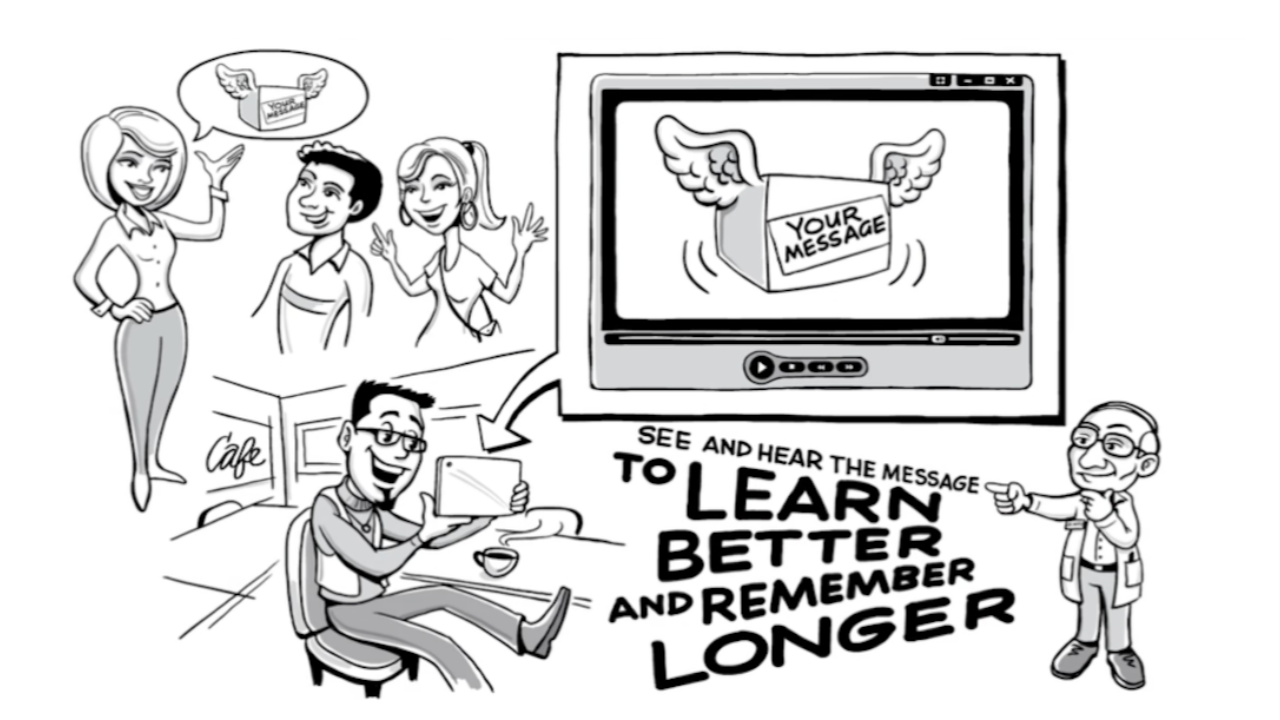
Leaders are under pressure to communicate workplace health, fatigue, mental health and suicide-prevention messages clearly, carefully and consistently. Hand drawn videos can help turn complex guidance into visual storytelling people can actually follow, without oversimplifying sensitive issues.
Are you sure your message is doing its job?
Many leaders already know the policy is written, the framework is approved and the training pack has been uploaded. The harder question is whether the message is actually landing.
That matters more than ever. Safe Work Australia says there were 146,700 serious workers' compensation claims in 2023 and 2024, while its national strategy from 2023 to 2033 sets the direction under the vision of "Safe and healthy work for all." At the same time, its psychosocial hazard guidance is explicit: hazards such as high job demands, low job control, poor support, remote or isolated work, bullying, harassment and traumatic material can create psychological and physical harm at work.
In other words, the challenge is not just compliance. It is comprehension.
If your team is tired, overloaded, dispersed, multilingual or carrying difficult lived experience, another dense document may technically exist without meaningfully changing anything. That is where hand drawn videos can earn their place. Not as decoration and not as a substitute for proper systems, but as a practical form of visual storytelling that helps people see what is expected, why it matters, and what to do next.
The communication gap leaders underestimate.
The U.S. Surgeon General's workplace framework still offers a useful cross-market lens here. It centres five essentials for workplace mental health and well-being: protection from harm, connection and community, work-life harmony, mattering at work, and opportunity for growth. Within "protection from harm," it specifically calls out adequate rest, physical and psychological safety and support for mental health.
That is a useful reminder for any organisation in the United States, Australia or New Zealand: people do not absorb important messages in ideal conditions. They absorb them while tired, distracted, stressed, under time pressure or unsure whether a message is really meant for them.
When communication ignores that reality, leaders often default to one of two bad options:
1. They oversimplify a serious issue into slogans, or
2. They overwhelm people with policy language that no one reads and/or remembers.
Good hand drawn videos sit in the middle. They can pace information, layer ideas in sequence and show relationships between causes, choices, consequences and support pathways. That makes them especially useful when the subject is sensitive and the audience needs clarity without alarmism.
Why hand drawn videos work well for safety and wellbeing topics.
For workplace health and safety communication, visual storytelling has three practical strengths.
First, it reveals process. A written policy may say psychosocial risks should be identified, assessed, controlled and reviewed. A hand drawn video can show that workflow in a way a busy supervisor or frontline worker can follow in real time.
Second, it slows complexity into steps. Fatigue, burnout, psychological safety and help-seeking are rarely single-issue topics. They involve signals, context, responsibilities and escalation points. Drawing these elements into a simple visual path can reduce ambiguity without trivialising the issue.
Third, it improves recall. When people can remember the sequence, they are more likely to act on it. That matters when the message is about taking breaks, checking in early, escalating a concern or recognising that remote or isolated work changes risk.
This is particularly relevant for fatigue. The Surgeon General's framework notes that insufficient rest and long work hours can increase the risk of workplace injury, mistakes, exhaustion, anxiety and depression. That is not just an HR talking point. It is an operational risk and it needs operational communication.
Sensitive topics need careful storytelling, not louder messaging.
Mental health and suicide prevention communication should be handled carefully. The World Health Organization states that more than 720,000 people die due to suicide every year and that effective prevention requires a comprehensive, multisectoral response. WHO also notes that suicide risk is shaped by social, cultural, biological, psychological and environmental factors and that some vulnerable groups include Indigenous peoples.
That should shape how organisations communicate.
A responsible message does not imply that one video, one campaign or one workshop "solves" mental health. It does not promise outcomes it cannot prove. It does not turn distress into marketing copy.
Instead, the goal is narrower and more useful:
- help people recognise a concern earlier,
- reduce confusion about support pathways,
- reinforce safe, respectful language,
- show leaders what supportive action looks like, and
- make it easier to repeat the message consistently.
That is where hand drawn videos are effective. They can model a conversation, map a decision path or explain what support exists without becoming sensational, graphic or culturally tone-deaf.
Cultural respect is part of message design.
If your workforce includes Aboriginal and Torres Strait Islander peoples, Maori or other Indigenous communities, cultural respect is not an optional polish layer. It is part of whether the message is fit for purpose.
That means avoiding generic "one size fits all" wellbeing language. It means recognising that community, history, identity, connection, trust and local context affect how messages are heard. It also means being careful not to frame communication as if the organisation is speaking for Indigenous communities rather than with them.
In practice, that can mean:
- co-designing language with relevant internal and community stakeholders,
- checking whether imagery, examples and voiceover feel respectful and recognisable,
- avoiding deficit-heavy narratives,
- using support pathways that are locally relevant, and
- knowing when a general workplace message should be adapted for a specific audience rather than broadcast unchanged.
Visual storytelling can support that care, but only if the process behind the video is respectful. A hand drawn video is not culturally safe because it looks warm. It becomes more useful when the script, review process and sign-off are grounded in the right people.
So, are you up to the task?
That is the real leadership question.
Not: "Do we have content?"
But: "Can our people quickly understand what we need them to notice, do, escalate and remember?"
If the answer is no, the problem may not be the seriousness of your message. It may be the format.
Hand drawn videos are not the answer to every communication problem. But for workplace safety, fatigue, psychosocial risk and wellbeing topics, they offer a strong middle ground between a policy document and an oversimplified campaign asset. They can make important ideas visible, memorable and repeatable. They can help leaders explain process, responsibility and support more clearly. And when handled with care, they can support culturally respectful communication rather than flattening it.
That is what effective communication should do. Not just inform. Help people act.
If your organisation is trying to explain a complex safety or wellbeing message and it still is not landing, it may be time to rethink the format. Hand Drawn Videos creates hand drawn videos built for clearer visual storytelling across training, change, safety and internal communication.
Sources:
- Safe Work Australia, homepage data and WHS context: <https://www.safeworkaustralia.gov.au/>
- Safe Work Australia, Psychosocial hazards: <https://www.safeworkaustralia.gov.au/safety-topic/managing-health-and-safety/mental-health/psychosocial-hazards>
- Safe Work Australia, Australian Work Health and Safety Strategy 2023-2033: <https://www.safeworkaustralia.gov.au/awhs-strategy_23-33>
- U.S. Department of Health and Human Services, Workplace Mental Health & Well-Being: <https://www.hhs.gov/surgeongeneral/reports-and-publications/workplace-well-being/index.html>
- U.S. Surgeon General, Framework for Workplace Mental Health & Well-Being PDF: <https://www.hhs.gov/sites/default/files/workplace-mental-health-well-being.pdf>
- World Health Organization, Suicide fact sheet, 25 March 2025: <https://www.who.int/news-room/fact-sheets/detail/suicide>
- Dudgeon, Milroy and Walker (eds.), Working Together: Aboriginal and Torres Strait Islander Mental Health and Wellbeing Principles and Practice: <https://www.telethonkids.org.au/globalassets/media/documents/aboriginal-health/working-together-second-edition/working-together-second-edition.pdf>
- Dudgeon et al., The Gayaa Dhuwi (Proud Spirit) Declaration: <https://doi.org/10.1080/18387357.2016.1198233>
